
Turn Commercial Opportunities into Revenue.
Sales Compass Consulting helps businesses grow through stronger commercial strategy, strategic partnerships and execution.
From luxury travel business growth to electric marine and air mobility commercialization, we identify the opportunity, build the strategy and help move it forward.
LUXURY TRAVEL
Luxury Travel Advisors. DMCs. Resorts. Maritime and Aviation. Luxury travel businesses.
We help you find the right clients, focus on the right markets, build better partnerships, and turn those relationships into revenue.
TWO DISCIPLINES. ONE COMMERCIAL PERSPECTIVE.
Luxury Travel Business Strategy & Growth
Your business may not need more leads. It may need clearer positioning, stronger partnerships and a better way to convert opportunities into revenue.
We help advisors, agencies, DMCs, tourism boards and travel brands strengthen their strategy, digital authority, sales performance and business systems.
Sales Strategy
Revenue Growth
Sales Conversion
Business Development
Sales Training
Strategic Partnerships
ELECTRIC MARINE & AIR MOBILITY
Commercializing the next generation of mobility.
For mobility companies and organizations evaluating or deploying emerging marine and air mobility technology.
Commercialization Strategy
Market Entry & GTM
Strategic Partnerships
Sales & Business Development
Commercial Feasibility
Deployment Strategy
Electric Marine & Air Mobility
The technology exists. The commercial path is the challenge.
We help operators, manufacturers, and project developers assess opportunities, identify the right partners and turn emerging mobility technology into commercially viable programs.
The difficult questions are commercial:
Where should it operate?
Who will pay for it?
Which partners are required?
What infrastructure is needed?
What regulations apply?
Does the business case work?
How do you get from demonstration to deployment?
That's where Sales Compass Consulting comes in.
We help organizations evaluate opportunities, build the commercial case, identify the right technology and infrastructure partners, and move projects toward operation.
The Problem Isn’t the Technology
Most operators don’t have an innovation problem. They have an execution problem.
The battery is ready. The motor is ready. The aircraft and the vessel exist. What stalls a project is everything around the hardware.
Charging infrastructure lags behind vessel and aircraft readiness at most ports and heliports.
Regulatory pathways shift by sector, by flag state, and by aviation authority.
Manufacturer and partner selection determines whether a route ships on schedule or stalls for years.
Capital committees want proof of feasibility before they release funding.
The result: delayed launches, stranded capital, and routes that never leave the whiteboard.
The Shift Is Already Priced In
Electrification of marine and air transport isn’t a future bet. It’s a current build out, and the operators who move now are setting the routes everyone else will have to follow.
~80% of Norway's 16 main road ferry connections were battery operated by the end of 2022
Analysts project the electric ferry sector to keep growing at double digit rates through the next decade
Electric ferry networks are already operating across Europe and other markets.
Major ferry systems are investing billions in vessel electrification and charging infrastructure.
These figures are where the opportunity sits, for the organizations willing to move on it first.

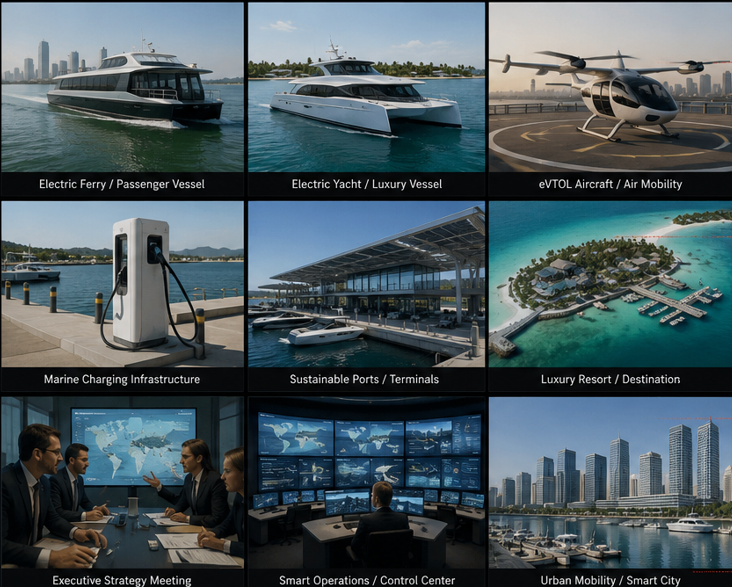
Who We Work With
Luxury Travel
Luxury Travel Agencies & DMCs
Luxury travel advisors, agencies and destination management companies looking to improve sales performance, conversion and revenue growth.
High Value Travel Businesses
Travel businesses serving affluent and UHNW clients that want to strengthen their sales process, business development and client retention.
Not ready for a call? Start by scoping an
Emerging Mobility
Electric Mobility Companies
Electric vessel manufacturers, eVTOL companies, seagliders, aircraft developers, charging providers and mobility technology companies.
Marine & Air Operators
Ferry operators, private operators, aviation operators, excursion companies and transportation providers.
Resorts & Hospitality
Luxury resorts, islands, waterfront properties and destinations evaluating new mobility solutions.
Government & Municipalities
Cities, transportation authorities and public agencies evaluating electric transportation networks.
Cruise & Yachting
Cruise companies, yacht operators, marinas and destination partners exploring new mobility opportunities.
Enterprise & Private Mobility
Organizations developing private transportation networks or specialized mobility programs.
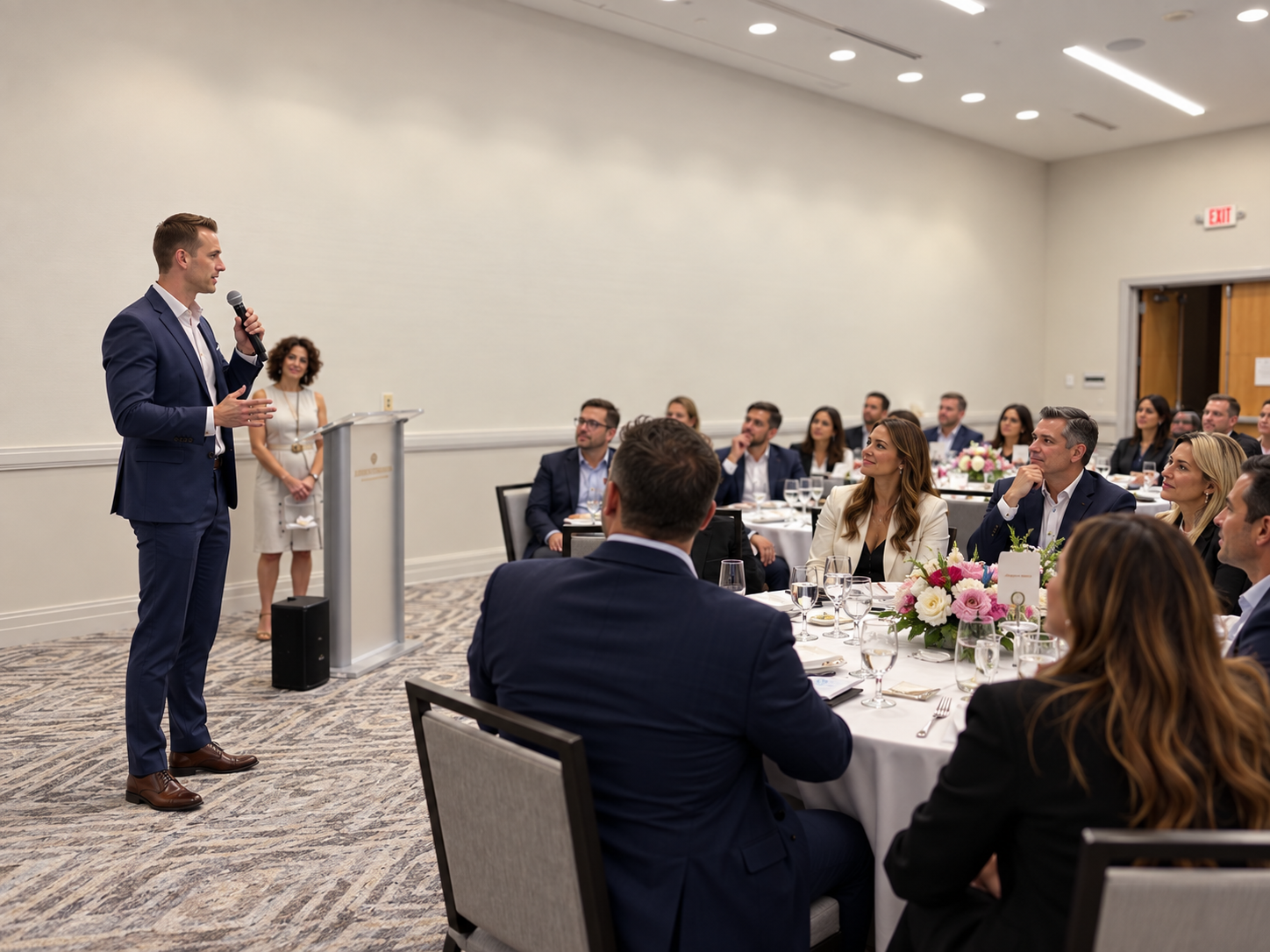
Where This Is Already Working
Real deployments, already in service or funded.
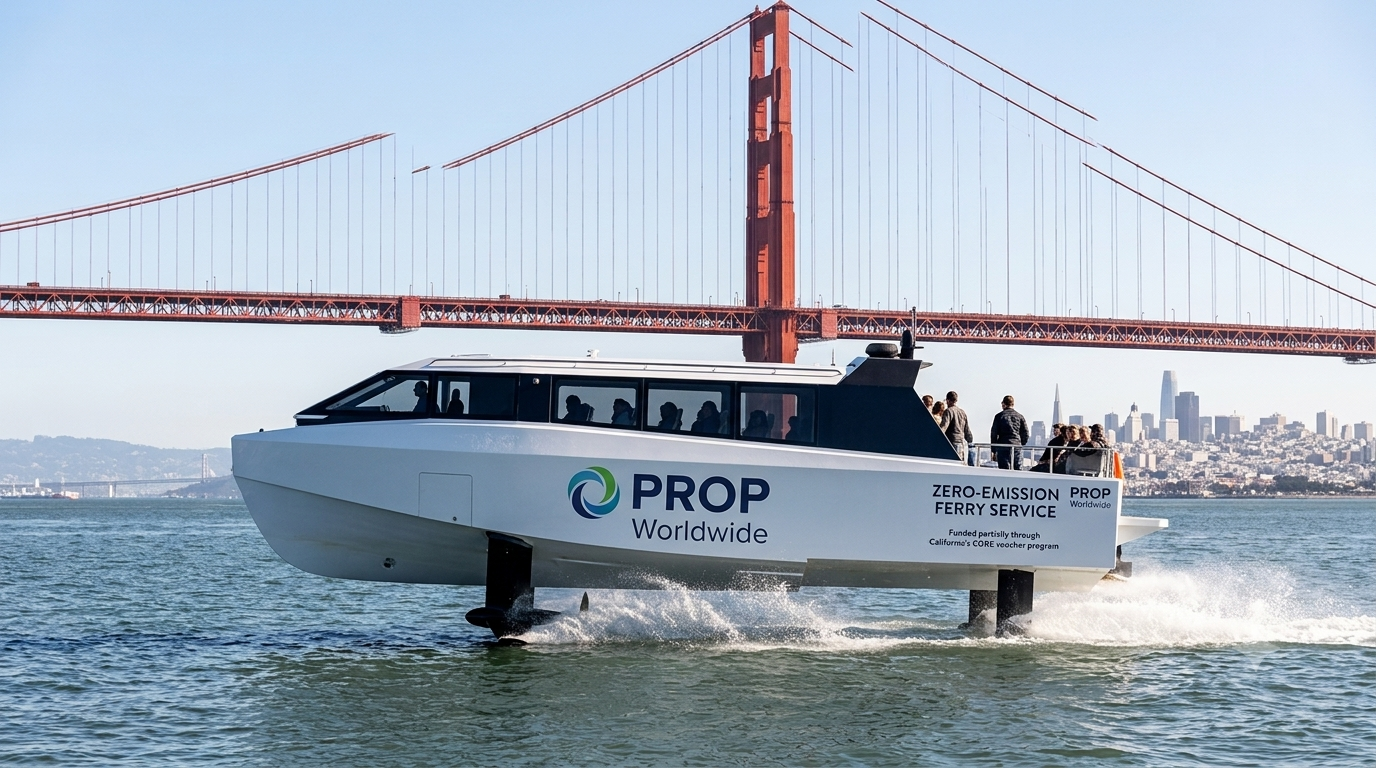
United States- Bay Area
PROP Worldwide has acquired an Artemis EF-12 Escape, a 30+ passenger electric hydrofoil, to launch zero emission ferry service in the Bay Area, partially funded through California's CORE voucher program.
United Kingdom- Isles of Scilly
Artemis Technologies, FRS Group, Connected Places Catapult, and the Council of the Isles of Scilly are advancing a feasibility study for a UK Green Shipping Corridor between Cornwall and St Mary's, deploying a fully electric passenger vessel on a route with no current winter ferry service.
Norway
By the end of 2022, around 80% of Norway's 16 main-road ferry connections were battery operated.
Washington State
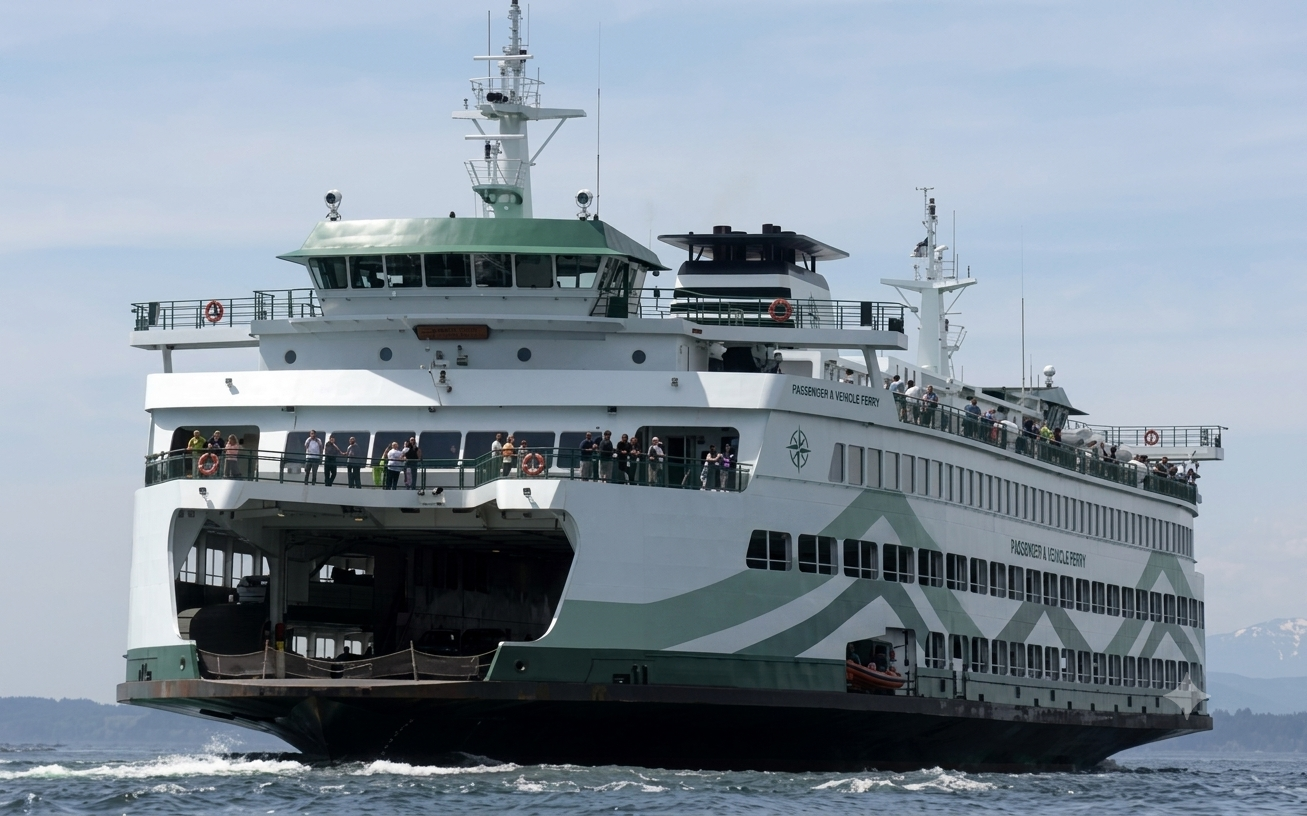
The largest ferry system in the country is mid-conversion right now, moving three vessels to hybrid-electric power under a $290 million program, with projected annual fuel savings of up to $8 million per vessel once fully electric.
This is the landscape Sales Compass Consulting operates in, real vessels, real routes, real capital already committed. The work is scoping which version of this fits your operation.
The Cost of Staying on Diesel
Washington State Ferries, the largest ferry system in the United States, shows what's actually at stake.
19 million
Washington State Ferries burns approximately 19 million gallons of diesel each year while carrying nearly 20 million passengers.
180,000
metric tons of greenhouse gas emissions produced each year, more than any other Washington state agency
$8M
in annual fuel savings per vessel once running fully electric, versus $1.6M in hybrid mode
$290M
committed to converting just three vessels to hybrid-electric, with federal funding covering only 15% of that cost
The math only gets harder from here. Diesel cost projections used in these plans assumed roughly $2 per gallon; recent prices have run more than double that. Every year on diesel is a year of exposure to a fuel cost the operator doesn't control.
Why Mobility Companies Work With Us
You Have the Technology. You Need the Market.
We help identify where your technology has the strongest commercial opportunity.
You're Entering a New Market.
We help identify customers, partners, operators, and commercial channels.
You Need the Right Partners.
We connect projects with relevant technology, infrastructure, operating, and commercial partners.
You Need Commercial Leadership.
We bring the commercial strategy, industry relationships and execution needed to move complex mobility opportunities forward.
You Need to Move From Pilot to Deployment.
We help turn promising technology into a commercially viable program.
This is much more buyer focused.
Why Travel Companies Work With Us
You’re Struggling to Find the Right Clients
You know you offer a great experience, but the right luxury travelers aren't finding you consistently.
You’re Not Sure Where to Focus
You’re trying to reach too many markets, niches or client types and need to know where the best opportunities are.
You Need Better Partners
You want stronger relationships with travel advisors, DMCs, hotels, resorts, yacht companies, cruise partners or other businesses that can send you qualified clients.
Your Sales Process Needs Work
You’re getting opportunities, but your sales process, follow up or systems aren't turning enough of them into revenue.
You’re Entering a New Market
You see an opportunity in a new country or client segment but need help identifying the right market, partners and approach.
LUXURY TRAVEL
Your Business May Not Need More Leads. It May Need More Revenue From the Leads You Already Have.
Luxury travel businesses can create solid demand and still leave revenue on the table.
The opportunity is usually in what happens after the inquiry: how leads are qualified, how quickly they are followed up, how the sales process is structured, how high value opportunities are presented and how effectively past clients become repeat and referral business.
Sales Compass Consulting helps luxury travel agencies, DMCs and high value travel businesses strengthen the commercial systems behind their sales.
WHO I HELP
Luxury Travel Agencies
DMCs
High Value Travel Businesses
Luxury Hospitality Hotels and Resorts
LUXURY TRAVEL
You don't need more travel sales advice. You need a clearer path to revenue.
For luxury travel agencies, DMCs, resorts and high value travel businesses struggling to attract the right clients, choose the right markets or build stronger commercial partnerships.
We help you:
Attract More Qualified Clients
Build the channels, partnerships and outreach strategy needed to reach more high value travelers.
Choose Where to Focus
Identify the right niches, markets, products and client segments instead of trying to sell to everyone.
Build a Better Sales System
Create the processes, follow up and sales strategy needed to turn opportunities into revenue.
Build Strategic Partnerships
Identify and approach the advisors, DMCs, hotels, resorts, operators and other partners that can generate recurring business.
Increase Client Value
Improve conversion, repeat business, referrals, longer stays and higher value bookings.
Where Is Your Revenue Leaking?
Take the 24-question Luxury Travel Revenue Leak Assessment and identify the areas of your sales engine that deserve attention.
EXPLORE THE LUXURY TRAVEL REVENUE AUDIT →
Case Study: From $0 to $702K in Travel Bookings in 9 Months
Case Study: Helping a Host Agency Grow from $5M to $7M
COMMERCIAL EXPERIENCE
$190M+
Revenue Generated Throughout My Career
$27M
Qualified Pipeline Built at Navier
30%
Of Navier Company Sales Generated During My First Four Months Leading Sales
Built for complex commercial opportunities.
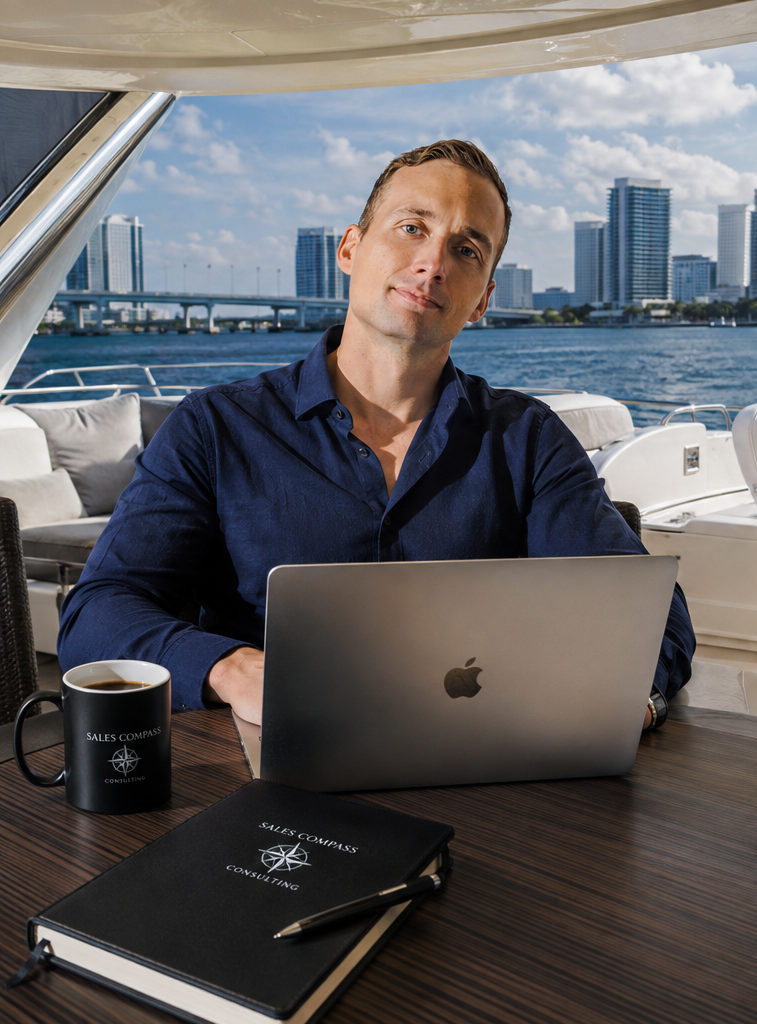
My experience spans emerging technology, maritime, luxury travel, hospitality, transportation and strategic partnerships.
I've built sales organizations, created go to market strategies from the ground up, developed multimillion dollar pipelines and worked on complex international opportunities where commercial strategy, relationships and execution all mattered.
Or, if you want this section to remain tightly focused on selling SCC:
Featured Case Studies:
1/ How I Built a $27M Pipeline for an Electric Hydrofoiling Marine Technology Company
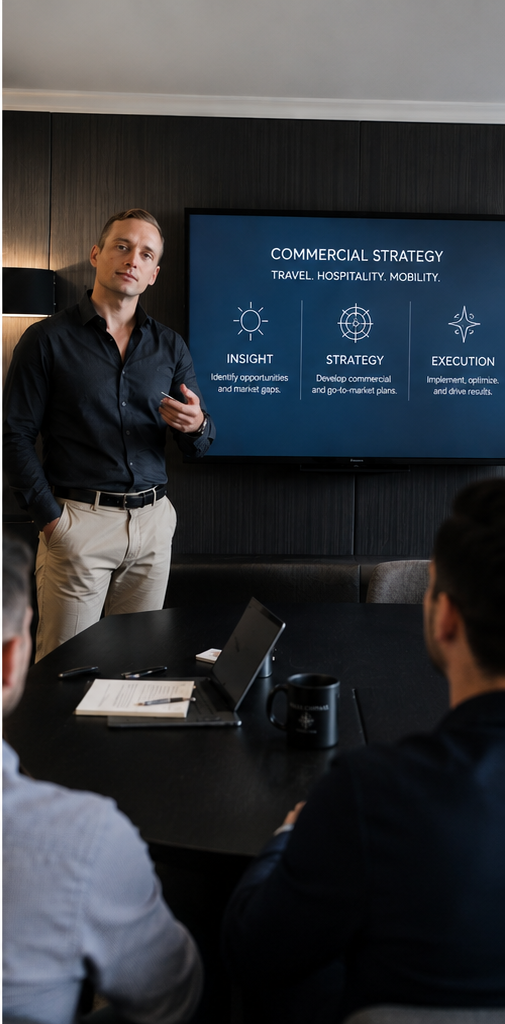
This case study explains how I built Navier's GTM strategy, developed the sales pipeline and created commercial relationships across multiple markets.
2/ How I Developed a $90M+ International Maritime Opportunity
From an operational requirement to a multi year commercial opportunity.
3/ From $0 to $702K in Cruise Travel Bookings
A 9-month story of supplier strategy, group negotiations and commercial growth
4/ The $5M to $7M Host Agency Growth Story
A 12-month story of agency strategy, advisor engagement and commercial execution
Meet Mathew
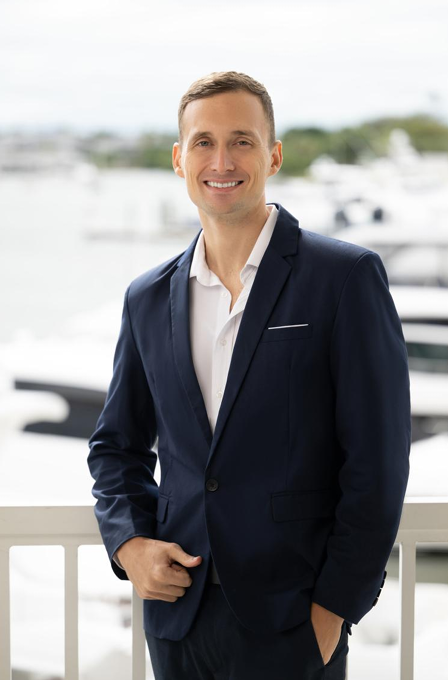
15+ Years Turning Complex Opportunities Into Revenue
$190M+ Revenue Generated Throughout My Career
$90M+ International Opportunity Secured
$27M Pipeline Built at Navier
30% of Company Sales Generated During First 4 Months Leading Navier Sales

Commercial strategy built from the field.
My career sits at the intersection of sales, revenue, partnerships, luxury travel and emerging technology.
I've generated more than $190M in revenue throughout my career, built multimillion dollar pipelines from zero and worked across complex, high value commercial opportunities.
At Navier, I led maritime sales for electric hydrofoiling vessels, built a $27M pipeline and generated 30% of company sales during my first four months leading Sales.
I help luxury travel businesses solve the commercial problems that get in the way of growth: finding the right clients, choosing where to focus, building the right partnerships, and creating sales systems that turn opportunities into revenue.
Today, I apply that experience across two areas:
Emerging Mobility
Helping companies and organizations move from technology and opportunity to commercial deployment.
Luxury Travel
Helping agencies and DMCs strengthen sales performance, conversion and revenue growth.
Meet Dyami

Dyami brings over eighteen years of experience in business development and client facing roles, with a strong record of driving growth in complex, technology driven markets.
He has spent more than a decade building and scaling partnerships in the technology sector, with deep experience in infrastructure, network systems, and translating complex technical capability into commercial outcomes. That background is directly relevant to the infrastructure side of electrification: charging systems, grid integration, and the technical partnerships that determine whether a project actually operates.
Fluent in English, French, and Spanish, Dyami has built a strong international presence across South and Central America, with a network of more than one thousand industry relationships spanning multiple continents.
At Sales Compass Consulting, Dyami focuses on partner sourcing, infrastructure relationships, and market entry support for mobility programs entering new regions.
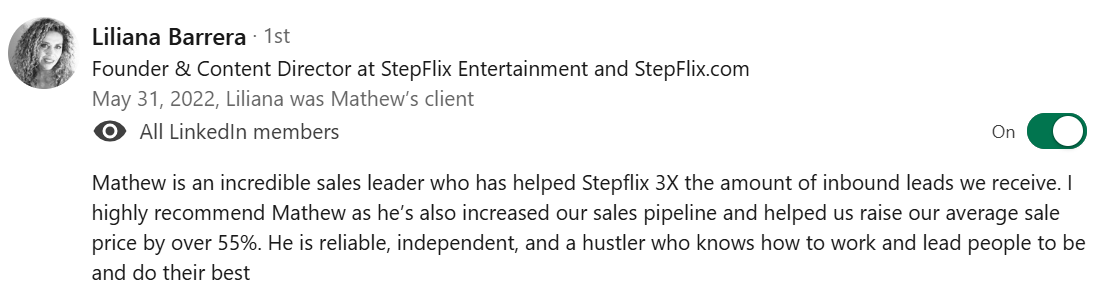
Testimonials


Where Luxury Travel Meets Mobility
The Future of Mobility Will Be Experienced Through Travel.
Luxury resorts. Cruise operators. Yacht companies. Waterfront destinations. Transportation networks.
As electric marine and air mobility develops, travel and transportation are increasingly intersecting.
SCC works across both sides of that equation:
Helping mobility companies commercialize new technology.
Helping travel businesses grow revenue and identify new commercial opportunities.
Luxury Resorts & Islands
Identify the right international markets and partner types, position your resort for those partners, and build relationships that bring in more valuable guests.
Guest transfers, waterfront transportation, and private mobility.
Cruise & Yachting
Find the right commercial opportunities, partnerships and client channels to grow high value cruise and yacht business. Shore experiences, vessel partnerships, marina operations, and destination mobility.
Luxury Hospitality
Transportation solutions that improve the guest experience while reducing operational dependence on conventional fuel.
Travel Agencies & DMCs
Attract more high value clients, sharpen your market focus, improve your sales process, and build a more repeatable path to growth.
Have a Commercial Opportunity You're Trying to Figure Out?
Whether you're commercializing emerging mobility tech or looking to strengthen your luxury travel sales engine, let's talk.
Not ready for a conversation?